
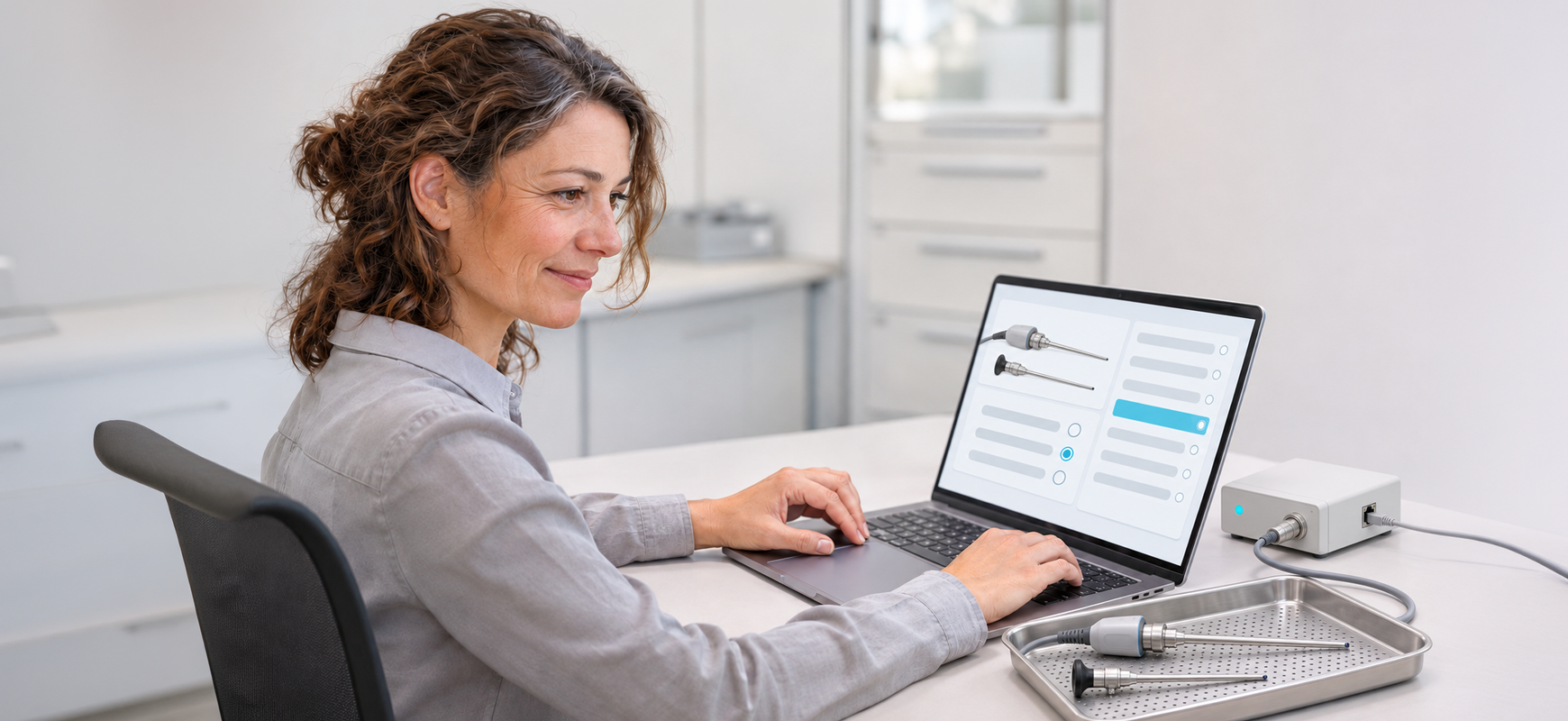

Digital Field Service
in Medical Technology
Efficiency in Field Service. Worldwide.
For a manufacturer of medical devices, we digitized the documentation of instrument inspections conducted at the customer’s site.
International service teams inspect surgical instrument sets for functionality and damage –—a process known as screening. In this reference project, we developed a unified application for the inspections, which had previously been documented differently depending on the market. It links existing product master data with the recorded findings and makes the inspection data centrally available to the service organization. Our contribution ranged from requirements analysis and software architecture through development and system integration to support during rollout and operation.
The Same Testing Process With Different Documentation
- Screen inspection is part of the on-site service.
- For each instrument tested, the service staff records the model number, whether it is in working order, and any damage present.
- The results were documented using tables and local applications.
- The tools and work methods used varied from market to market.
The task was to optimize this aspect of the international field service:
The inspection documentation was to be consolidated into a shared application that could be used in day-to-day service operations and incorporated existing product data. At the same time, the inspection results were to be made available centrally so that they could be analyzed beyond the scope of individual service calls.
Product Master Data and Inspection Results in the Same Process
The implemented application tracks the screening process. Item master data from integrated inventory systems is available for entry. Service personnel assign the inspected instruments and document findings and damage within a common structure.
The information is stored centrally and is available for cross-functional analyses. In this way, the application supports field service management in a clearly defined subprocess: inspection documentation at the customer's site.
Here's how digital screening works:
- Assign instrument:
Service personnel use the existing item master data to assign the inspected instrument. - Document inspection findings:
Functionality and any damage detected are recorded in a structured manner. The technical inspection remains the responsibility of the service personnel. - Centralized Use of Inspection Data:
The stored item, inspection, and damage data can be analyzed across individual screening results.
Our Services
doubleSlash gathered requirements through workshops and discussions with service stakeholders from multiple markets. Building on this, the application was developed in agile implementation phases. The collaboration combined the technical design of the testing process with development, system integration, and support for the international rollout.
The project scope included:
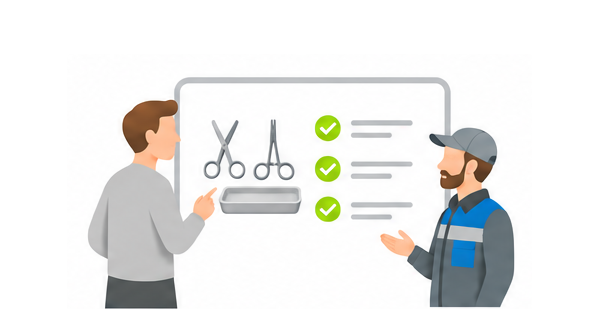
Requirements Analysis

Software Architecture and Security Concept
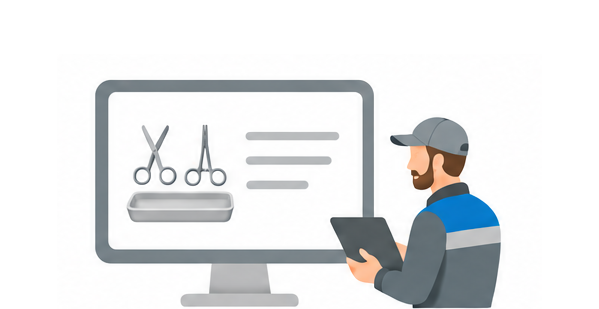
UX/UI Design and Front-End Development
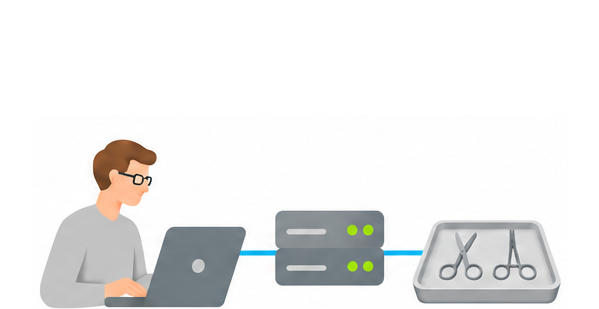
Back-end Development and System Integration

Infrastructure Development and Automated Deployment

Rollout Support and Technical Support
A Central Data Repository For International Service
With the implementation of this application, the service organization gained a common platform for documenting screen inspections. Information that was previously recorded using various tools is now documented within a unified structure and stored centrally. Existing item master data links the recorded findings to the instruments that were inspected.
- As a result, the inspection data remains usable beyond the scope of a single service call.
- The service organization can view documented damage, for example, by item and type of damage.
- Uniform product master data and consistent data collection create the conditions necessary to evaluate findings from different service teams in a coherent manner.
What Matters in Digital Transformation for Field Service
How can inspection documentation be standardized in the international field service sector for medical technology?
How is a field service application integrated with existing product and ERP systems?
What foundation do AI applications in field service need for instrument data collection?
What types of analysis does digital screening enable?
When does it make sense for a medical device manufacturer to use custom software for its field service operations?
Get More Out of Your Service Data
Data Intelligence: Using Inspection Data to Inform Service Decisions
With Data Intelligence, you can leverage existing service and inspection data for reporting, dashboards, and analyses. This provides business units with a clear foundation for their decisions.


AI Business Integration: Integrating AI into Service Processes
AI Business Integration connects AI with your data and business processes. Together, we identify suitable use cases and determine which data and integrations are required for implementation.
Questions About Digitization
In Field Service?
Would you like to learn more about this approach or discuss a similar service process? Stefan Dürnay is your contact.

 +49 7541 70078–714

